Basic due diligence,
on every cite.
Run it on the brief across the table. Run it on your own before you sign.
You get a report you can defend, with research you can trust.
What we check
CitationClerk checks every citation against more than ten million opinions (state and federal), statutes and regulations, plus the underlying dockets and court records.
- Does the case exist?
- Is the cite correct?
- Does each quoted passage appear in the cited opinion?
We find mistakes that other people miss, because we do the work.
See the work
Even the best briefs need a check.
We ran a real petitioners' brief to the Supreme Court through CitationClerk. The brief quoted the obscenity test from Miller v. California, but when we checked the quote against Miller, the quote didn't match:
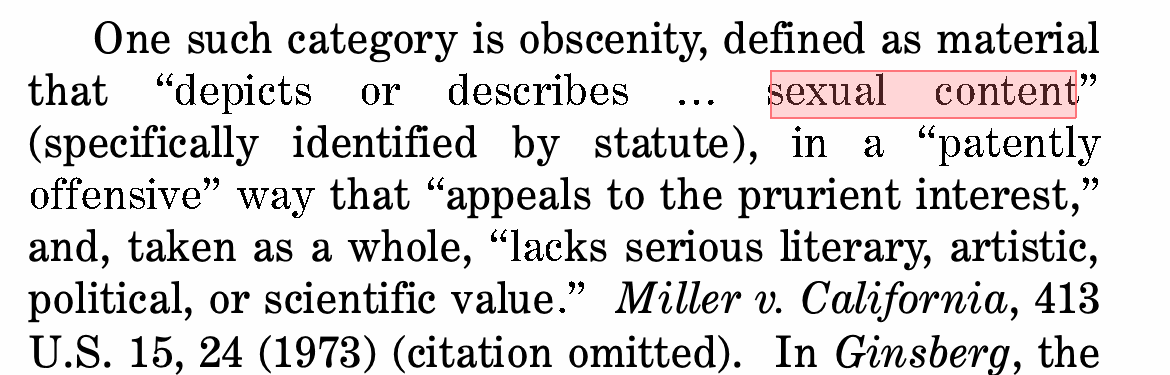
“…whether the work depicts or describes, in a patently offensive way, sexual conduct specifically defined by the applicable state law…” Miller v. California, 413 U.S. 15, 24 (1973)
See for yourself: the brief as filed, and Miller v. California, 413 U.S. 15.
One word changes what the test says. With CitationClerk, you can catch and fix mistakes before you file.
How we check
We look in multiple places.
We start from CourtListener's open law library, which covers state and federal courts. If a case isn't where it should be, we keep looking through dockets, court records, and public archives before reporting back. Recent decisions, slip opinions, and cases that aren't in the usual databases each have their own retrieval path.
We locate every quote.
When a brief quotes a case, we pull the opinion text and find the language inside it. Ellipses, internal quotation marks, and "(cleaned up)" attribution are all handled. If we still can't find it, we let you know.
We show our work.
Every verdict links back to a public source you can read: the matched opinion, the located passage, the statute text. Read the source yourself and decide.
We stick to the record.
We don't summarize cases or tell you what they stand for. We check the record and leave the practice of law to you, the lawyer.
Your responsibility
You sign it. You own every cite in it.
Under FRCP 11 and Model Rules 1.1 and 5.3, lawyers are responsible for every citation in every filing they sign, regardless of who or what wrote it. Good faith is not a defense.
Mata v. Avianca, No. 22-cv-1461 (PKC), Hr'g Tr. 9:17–19 (S.D.N.Y. June 8, 2023).
Upload a PDF
Try a brief, free.
Get back a detailed, interactive report,
with a source behind every verdict.
No card required. Your brief is stored securely for 30 days, then deleted. Your information is not shared.
The checking is done by regular software, not AI, and your brief is never used to train anything. See our privacy policy and terms.
Running briefs regularly, or for a team?
Get in touch.
Featured reports
We find mistakes that other people miss.
See how CitationClerk does on real briefs.